Cleveland grew outward from the Cuyahoga River, layering steel mills, warehouses, and residential neighborhoods on glacial till and lake plain sediments. Each redevelopment project today encounters fill of wildly variable origin, from coal cinders to demolition debris. Compaction control determines whether a new slab stays flat or a utility trench settles into a depression after two freeze-thaw cycles. In our experience, the Proctor test provides the reference density that every lift of backfill is measured against, turning chaotic urban fills into predictable bearing layers. We run both Standard and Modified procedures, matching the energy level to the project specification. The sand cone density test gives us the field number that we check directly against the Proctor curve, closing the loop between lab optimum and actual in-place compaction.
A Proctor curve is not just a number; it is the fingerprint of a soil's response to mechanical energy, and in Cleveland's glacial tills that fingerprint changes with every foot of depth.
Scope of work in Cleveland
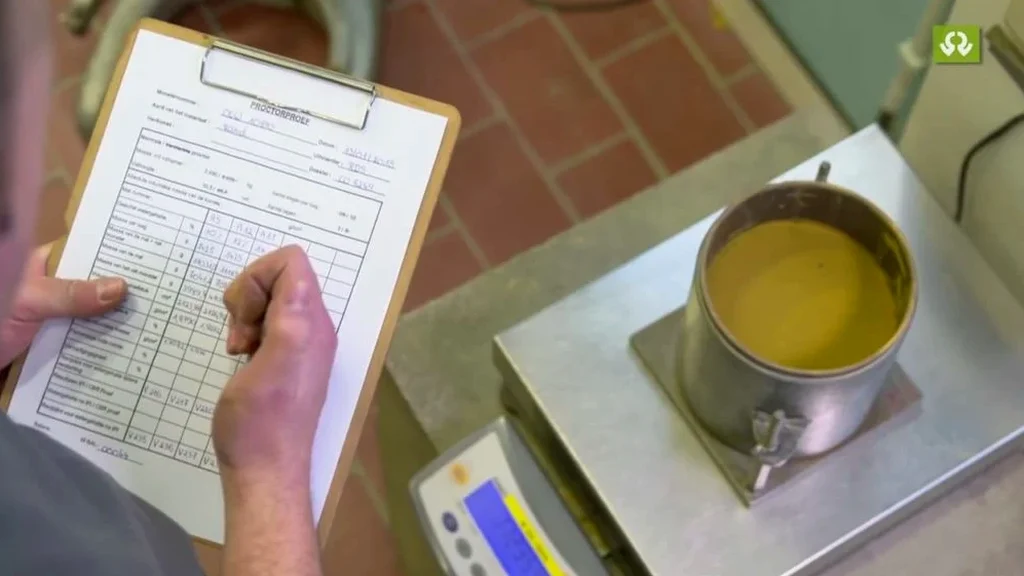
Typical technical challenges in Cleveland
Lake Erie drives Cleveland's weather with sudden storms, lake-effect snow, and humidity that keeps site soils wet well into June. A Proctor curve developed on oven-dried material can mislead a project if the field crew chases a moisture content that the site soil never reaches naturally. We have seen fills compacted on the dry side of optimum pass density tests in August, only to collapse upon wetting in October when the water table rebounds. The biggest risk is specifying Modified Proctor on moisture-sensitive clay fill without adjusting for the workability window; the soil can fracture rather than densify if the contractor cannot maintain moisture within a tight band. We address this by running a family of curves at different moisture preparation conditions and by pairing the Proctor with in-situ permeability tests when the fill will serve as a low-permeability cap over contaminated soil, a frequent requirement on Cleveland brownfield redevelopments.
Our services
Our Cleveland lab supports earthwork contractors, geotechnical consultants, and municipal inspectors with Proctor testing and related compaction control services. Each package includes the full moisture-density curve, zero-air-voids line, and specific gravity backup.
Standard Proctor (ASTM D698)
The baseline for structural fill, trench backfill, and landscaping subgrade. We test with the appropriate mold size based on the maximum particle size present in the borrow sample, reporting dry density, optimum moisture, and oversize correction if needed.
Modified Proctor (ASTM D1557)
Required for high-energy compaction specifications such as ODOT subbase, heavy pavement sections, and deep utility bedding. The 10-lb hammer and 18-inch drop simulate the effect of modern vibratory rollers and padfoot compactors operating at full capacity.
Field Density Correlation Package
We pair the lab Proctor curve with field sand cone or nuclear gauge results to compute percent compaction and relative density. This package includes moisture content verification, gradation comparison between lab and field samples, and a compliance letter signed by our senior technician.
Quick answers
Which Proctor method does the City of Cleveland typically require for residential foundation backfill?
The Cleveland Building Code and Housing Department generally reference Standard Proctor (ASTM D698) for residential foundation backfill and garage slabs, with a minimum compaction of 95 percent of maximum dry density. However, if the structural engineer specifies a higher modulus or the fill is deeper than four feet beneath a footing, the project may be bumped to Modified Proctor. We recommend checking the approved soil report before ordering the test.
How much does a Proctor test cost for a Cleveland earthwork project?
A single-point Proctor curve, whether Standard or Modified, typically runs between US$110 and US$210 in our Cleveland lab depending on mold size, number of points on the curve, and whether oversize correction is needed. Multi-sample projects with rapid turnaround may qualify for volume pricing; contact our office with the number of borrow sources and we will provide a firm quote.
How long does it take to get results from a Proctor test, and can you handle wet samples from Cleveland sites?
Standard turnaround is 24 to 48 hours after we receive the sample. We run moisture content per ASTM D2216 in parallel to the compaction test, so we can report the full curve the next business day. Wet samples are expected in Cleveland; we dry them at 60°C for moisture-sensitive clays and 110°C for granular soils to avoid altering the clay mineralogy, then process them immediately.