Working near the Cuyahoga River or the old industrial flats means dealing with decades of uncontrolled fill. Some of it dates back to the steel mill era. Vibrocompaction design is often the only way to densify these materials deep enough to support a structure without overexcavating. Cleveland's glacial history left complex deposits of sand, silt, and lacustrine clay, and the water table sits high — sometimes within six feet of grade in the Flats. A standard fill-and-compact approach simply does not reach the necessary depth. Our design process starts with existing geotechnical data, runs through settlement analysis per FHWA guidelines, and specifies probe spacing, energy levels, and verification testing to match the site's stratigraphy. For sites where the granular layer is thinner than expected, we often recommend pairing the compaction plan with a CPT test campaign to map the transition into the underlying clay and confirm that the target depth is actually achievable before mobiulizing the vibrator.
In Cleveland's Flats, vibrocompaction design must address water table at six feet and fill that can vary from slag to silt over a horizontal distance of thirty feet.
Scope of work in Cleveland
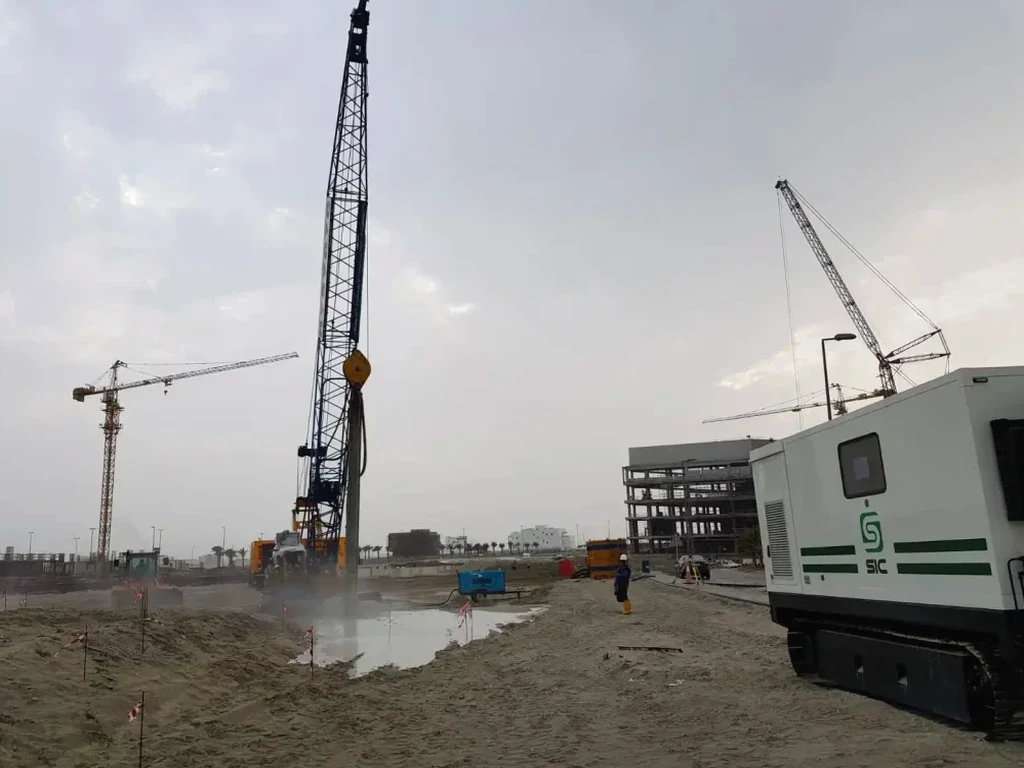
Typical technical challenges in Cleveland
A five‑story apartment building off Detroit Avenue was designed on spread footings. The geotechnical report identified loose silty sand from 8 to 28 feet, but the contractor assumed conventional compaction would suffice. After six months, differential settlement cracked the ground‑floor slab and jammed elevator doors. The repair cost exceeded $400,000. In Cleveland, loose glacial outwash and man‑made fill are common, and the high water table in neighborhoods like Ohio City reduces the effective stress that would otherwise help natural consolidation. Vibrocompaction design mitigates this by densifying the granular skeleton before structural loads are applied, using water or air flush to keep the hole open. The key is specifying the right energy and spacing for the actual grain‑size distribution. Without a proper design, you either waste passes in dense lenses or leave loose pockets that settle later. Sites within the Lake Erie shoreline influence zone also need liquefaction checks for the design earthquake — something a standard compaction spec rarely addresses.
Our services
We provide vibrocompaction design packages that go beyond standard grid drawings. Each plan includes a geotechnical basis of design, probe layout, energy and withdrawal rate specifications, and a verification testing protocol adapted to Cleveland subsurface conditions.
Performance‑Based Vibrocompaction Design
Full design package with settlement analysis, liquefaction triggering evaluation, and compaction specifications for granular fills and natural sands found in the Cleveland area.
Post‑Treatment Verification Planning
Design of CPT or SPT verification programs, including acceptance criteria tied to relative density and blow count targets, plus reporting for building department submittals.
Quick answers
What does vibrocompaction design cost for a Cleveland project?
Design fees typically range from US$1,660 to US$5,860 depending on site size, number of treatment zones, and the level of verification testing required. A small commercial lot in Tremont will cost less than a multi‑block industrial redevelopment in the Flats.
How deep can vibrocompaction treat in Cleveland glacial soils?
With the vibrators we specify, treatment depths of 15 to 45 feet are typical. The actual depth depends on the granular layer thickness, which in Cleveland often pinches out against glacial till or shale bedrock. We use CPT soundings to confirm the bottom of the treatable zone before finalizing the grid.
Do you handle the compaction work or just the design?
We prepare the design package, including probe layout, energy parameters, and acceptance criteria. We coordinate with specialty contractors who execute the work, and we can provide field oversight and verification testing to ensure the compaction meets the specified relative density.
Is vibrocompaction effective in all Cleveland fill types?
No. Vibrocompaction works best in granular soils with fines content below about 12 percent. If the fill contains significant silt or clay layers—common in some Cleveland industrial areas—we may recommend alternative methods like stone columns or deep soil mixing. We always run grain-size analyses before committing to vibrocompaction.